Carbon Neutral Islands (CNI) Project
The CNI Project is a Scottish Government commitment that aims to demonstrate the climate-resilience and low carbon potential of islands by 2040.
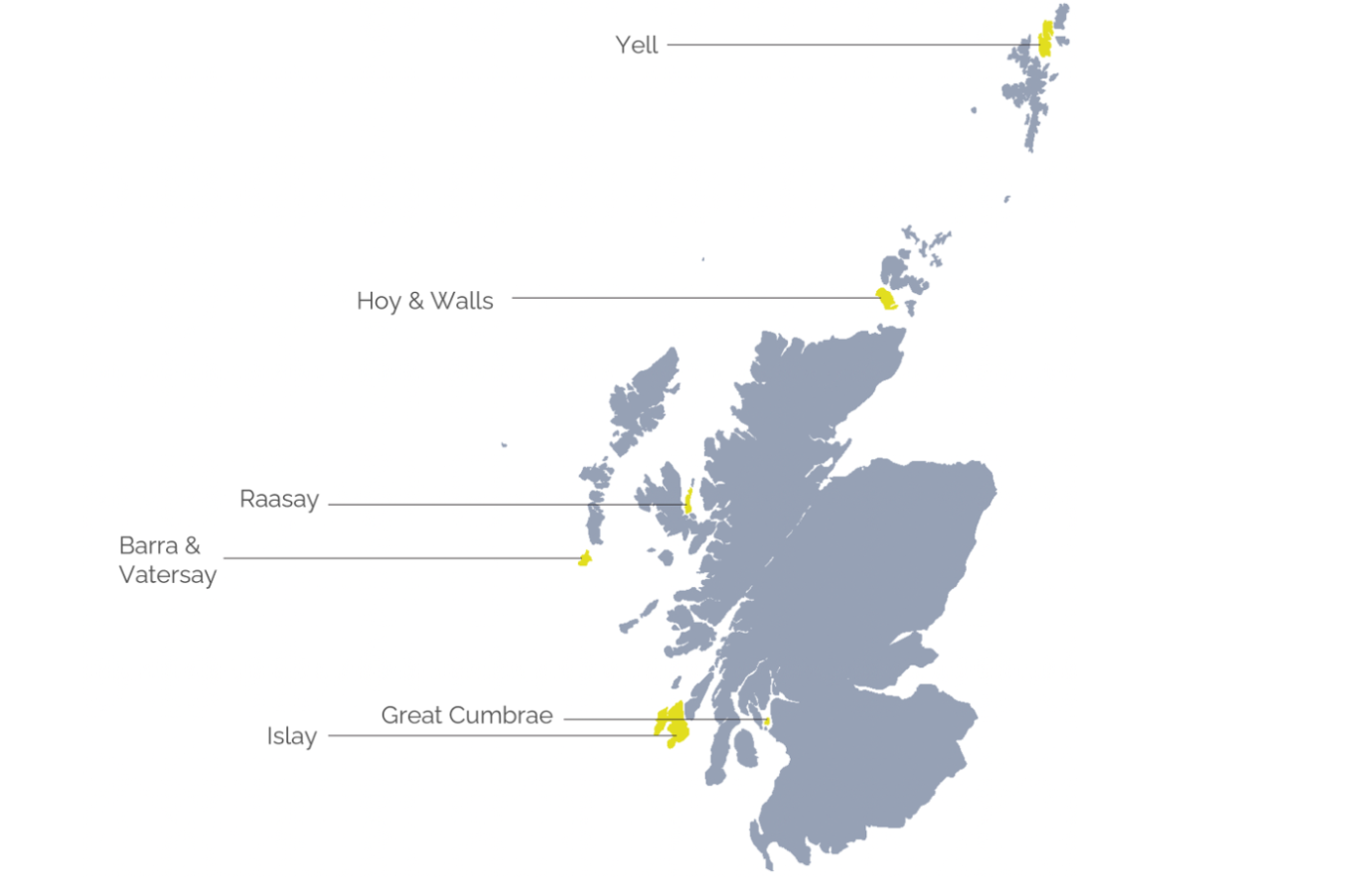
In May 2022, the Cabinet Secretary for Rural Affairs and Islands announced that six Scottish islands would be supported by the Carbon Neutral Islands project: Cumbrae, Barra, Hoy, Islay, Raasay, and Yell, representing one island from each of the local authority areas with responsibility for inhabited islands in Scotland.

What is Carbon Neutral?
The Project considers carbon neutrality akin to net zero. Accordingly, a carbon neutral island is ‘an island where the greenhouse gas (GHG) emissions (recorded as CO2 equivalent) are in balance with the sinks.’ Sinks can be natural resources capable of absorbing CO2 (e.g. trees) or technological solutions that do the same thing (e.g. carbon capture and storage).
The project aims to achieve carbon neutrality on each of the 6 islands by 2040, five years prior to Scotland as a whole.
Drivers underpinning the Carbon Neutral Islands Project
The CNI project is underpinned by the following key drivers: alignment, justice and inclusion, and replicability.
Alignment: The project aims to align with existing island-based climate change actions and to avoid duplication of efforts.
Justice and inclusion: The project will support islands to become carbon neutral in a just and fair way.
Replicability: The work is being completed to standardised and agreed methodologies wherever possible to allow replication and direct comparison.
Climate Change
Climate change and nature loss are amongst the greatest threats facing our planet. Small, low-lying islands are under threat from climate change and predicted rising sea-levels. Climate change is expected to increase instances of flooding and coastal erosion, whilst simultaneously negatively affecting water supply, food production, health, tourism and accelerating habitat depletion.
Scotland has declared a climate emergency and stepped up its climate action and commitments through Scotland’s 2019 Climate Change Act – calling for net zero greenhouse gas emissions by 2045. Scotland’s climate change legislation also ensures we prepare and adapt to the impacts which are already locked in, including rising sea levels and more extreme weather.
Benefits of Decarbonisation
While the overall aim of decarbonisation is to address global climate change, at a local level there are direct benefits from community climate actions. Benefits can include reducing costs for households and businesses, healthier people and places and new opportunities for employment and skills development. This plan aims to address the need for both adaptation actions that
manage and reduce the negative impacts of climate change, and mitigation actions that reduce emissionsthatcontributetoclimatechange. Figure 2 (above) illustrates that adaptation and mitigation often overlap, and both are needed to help reduce risks from changes in climate and weather and increase community resilience.
Local Points of Contact
Scott J. Watson
Community Development Officer (Cumbrae)
scott@carbonneutralcumbrae.co.uk
Dianne Smith
CNI Engagement Officer (Cumbrae)
dianne@carbonneutralcumbrae.co.uk
Success of the Carbon Neutral Islands project on Cumbrae will rely on the community working together with local, regional and national partners as well as on-going support from the local authority and Scottish Government.
However, it will be the Cumbrae community’s own drive, local expertise and passion for a greener and more sustainable island that will make it happen.